Facial Recognition Gains Traction in Smart Offices
Across Asia
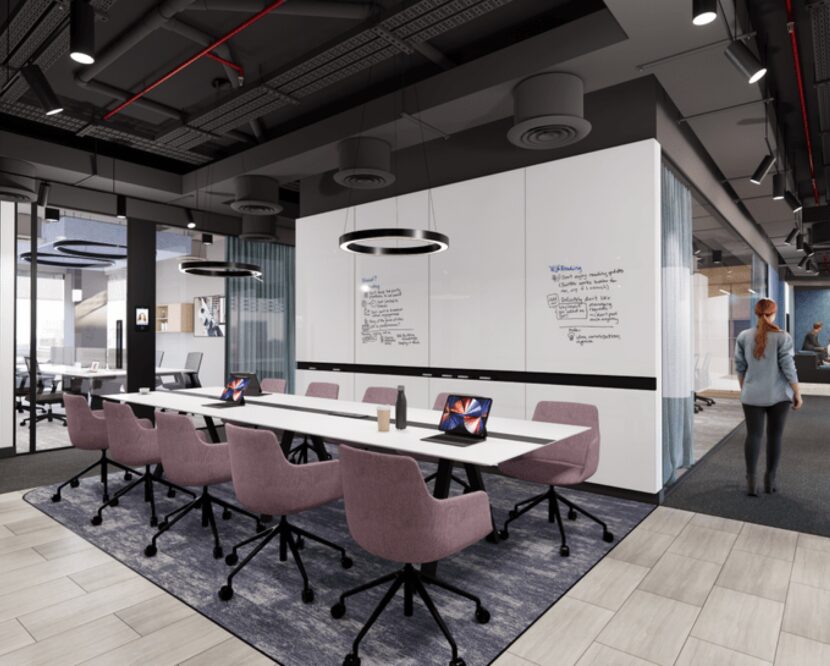
For a while, it seemed like the office might disappear altogether. Remote work proved not only possible, but highly effective. Across Asia, from Singapore to Bali and Bangkok, digital nomads, hybrid teams and distributed companies embraced flexibility as the new normal.
And yet, the office is not going away.
Based on data from global market studies, including the rapid growth of flexible office spaces, it is evident that demand for physical workplaces is rising. Employees are returning to shared workspaces, if not full-time, then at least part-time. But what they expect from the office today is fundamentally different from what it was just a few years ago.
Today’s office users expect environments that are safe, hygienic, flexible and digitally enabled. In short, they expect smart offices.
From optional innovation to workplace necessity
Smart buildings have existed for decades, but the pandemic accelerated their evolution. What was once considered innovation is now becoming a baseline expectation, especially in Asia, where technology adoption tends to move faster and at scale.
In cities with booming co-working ecosystems and high workforce mobility, office operators are under pressure to deliver:
- Seamless access to shared spaces
- Real-time occupancy visibility
- Minimal physical contact with infrastructure
- Smooth experiences for both employees and visitors
This is where facial recognition technology is emerging as a practical solution.
Why facial recognition fits smart offices
Facial recognition is increasingly being adopted in office environments not as a futuristic add-on, but as a tool that addresses real operational needs.
Its value becomes especially evident when viewed through the lens of post-pandemic expectations:
- Reducing touchpoints: Contactless entry eliminates dependence on cards, keypads and shared devices, aligning with heightened hygiene standards.
- Managing changing occupancy: In co-working spaces and hybrid offices, the flow of people changes constantly. Facial recognition technology allows for instant identification without manual checks or delays.
- Enhancing security: Unlike traditional credentials, biometric identifiers cannot be lost, shared or duplicated.
- Improving convenience: No cards, no passwords — just seamless movement through the workspace.
A practical starting point for biometric adoption
Compared to airports, government institutions or manufacturing facilities, offices are more controlled, involve lower infrastructure complexity and offer faster deployment timelines — often just a few weeks. They also provide straightforward scalability as operational needs grow.
That is why for many organizations, especially in Asia, office spaces are becoming a practical entry point for biometric adoption.
A strong example is the implementation of facial recognition technology by RecFaces at iSpace Smart Office in Dubai.
The project aimed to support remote office management, automated workspace booking and stronger security while maintaining a smooth user experience. RecFaces deployed its Id-Gate facial recognition solution, integrated with the office’s existing infrastructure.
The system enables users to access the office without cards or passwords, open lockers and use shared resources, and move seamlessly through different areas of the workspace. Identification takes less than a second, significantly improving flow and reducing waiting times. At the same time, the system supports multi-factor authentication, combining biometrics with RFID cards or QR codes where needed, ensuring flexibility for different scenarios.
The deployment was completed within one month, demonstrating the relative ease of implementing biometric systems in office environments.
Outlook
As organizations across the region continue to invest in smart offices and flexible workspaces, demand for technologies that combine security, automation and user convenience is expected to grow.
Facial recognition is well positioned to meet these requirements, particularly in office environments, where implementation is faster and return on investment can be realized quickly.
For many companies, smart offices are not only a response to post-pandemic expectations, but also a practical starting point for broader digital transformation initiatives.
FAQ
What is facial recognition in a smart office?
How does facial recognition improve office security?
How do facial recognition access control systems work?
Can facial recognition integrate with existing office systems?
Is facial recognition safe for employee privacy?
Is biometric data safe and secure?
Modern biometric systems use encryption, consent-based enrollment, and temporary data storage with automatic deletion. Compliance with regional data protection laws is essential.
How does facial recognition improve operational efficiency?
How can I get a consultation or request a demo of RecFaces biometric solutions to try them on real office environment?
If you're a smart office decision-maker, IT integrator, or tech distributor interested in seeing how our facial recognition solutions can work in your environment, you can request a free consultation or 3-month product demo here submitting short form in the upper right corner on this website or simply send us an email at sales@recfaces.com.
Our team will walk you through use cases, integration options, and deployment strategies tailored to your specific operational needs.
Why are smart offices in APAC adopting facial biometrics so quickly?
How long does deployment in smart offices usually take?
How can I get a consultation or request a demo of RecFaces biometric solutions to try them in a real office environment?